A few bites in and you're done. It's one of the first things many people notice on a GLP-1 medicine. Two things are going on: your stomach empties more slowly, and the medicine acts on appetite signals in your brain. Here's what the prescribing information says about each.
What does “delayed gastric emptying” mean?
Your stomach holds food for a while, then lets it out through an opening into the small intestine called the pylorus (MedlinePlus). “Gastric emptying” is how fast that happens. The labels for Ozempic, Wegovy and Mounjaro all say the medicine delays gastric emptying, so food stays in the stomach longer.
How much it slows down depends on the medicine. The Ozempic label calls it a minor delay in the early part after a meal.
Why does a slower stomach make you feel full?
When food leaves more slowly, your stomach stays fuller for longer after you eat, and that full feeling lasts. The labels also say these medicines lower how much people eat:
- Semaglutide (Wegovy, Ozempic) decreases calorie intake, which the Wegovy label says is likely by affecting appetite.
- Tirzepatide (Mounjaro, Zepbound) decreases food intake (Mounjaro label).
- Orforglipron (Foundayo) decreases food intake, likely by lowering appetite.
Is it just the stomach, or the brain too?
The brain too. The Wegovy label says the GLP-1 receptor is present in several areas of the brain involved in appetite regulation, and that in animal studies semaglutide reached and activated nerve cells in brain regions that regulate food intake. The Foundayo label says the same of orforglipron. So fullness isn't only about how much is in your stomach. It's also about the signals your brain gets.
“GLP-1 is a physiological regulator of appetite and caloric intake, and the GLP-1 receptor is present in several areas of the brain involved in appetite regulation.”
Does the stomach slowdown last forever?
For some of these medicines, the labels say it's biggest at the start.
- Tirzepatide and orforglipron: the delay is largest after the first dose and gets smaller over time (Mounjaro and Foundayo labels, section 12.2).
- One way it was measured: after a first 5 mg tirzepatide dose, a test medicine taken by mouth (acetaminophen) reached a peak level 50% lower and 1 hour later. By week 4, there was no meaningful effect (Mounjaro label, section 12.3). The test medicine is just a way to time the stomach; this isn't advice about taking it.
- Semaglutide: the Ozempic label calls the delay minor, and in a separate study no clear effect on the rate of stomach emptying was seen with semaglutide 2.4 mg (Ozempic label, section 12.3). That fits with fullness coming from appetite signals too, not only the stomach.
What helps when you fill up fast?
Feeling full sooner is expected on a GLP-1. If it tips into queasy, MedlinePlus's general advice for nausea and vomiting (not written for GLP-1s specifically) can help:
- Several small meals through the day instead of three big ones.
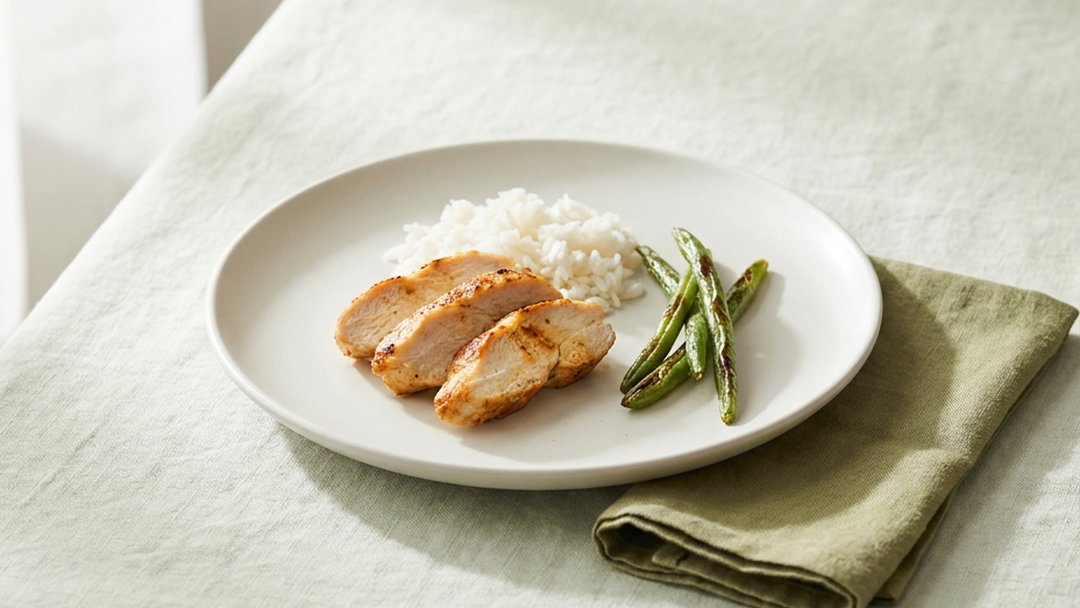
- Bland foods like crackers, toast, rice, potatoes, and baked chicken or fish.
- Go easy on greasy and very spicy foods, and foods with strong smells.
- Sit up after you eat instead of lying down.
- Keep sipping fluids. The Ozempic Medication Guide says drinking fluids helps lower the chance of dehydration from nausea, vomiting or diarrhea.
For meal ideas that fit a smaller appetite, see 10 meals that work on a GLP-1.
Why your care team needs to know before surgery
A slower stomach can still have food in it when you think it's empty. The Ozempic and Wegovy labels say there have been rare reports of pulmonary aspiration (food or liquid getting into the lungs) in people on GLP-1 medicines who had anesthesia or deep sedation, even though they said they had fasted as told. The labels ask you to tell all your healthcare providers that you take the medicine before any planned surgery or procedure.
What about pills and birth control?
Because food and pills leave the stomach more slowly, the Ozempic label says the delay could affect how other medicines taken by mouth are absorbed, and asks for caution. The Mounjaro label goes further for birth control pills: switch to a non-oral method, or add a barrier method, for 4 weeks after starting and for 4 weeks after each dose increase. Ask your prescriber or pharmacist about anything you take by mouth.
How Checkin helps with meals
Checkin is a free AI companion for GLP-1s that you text. For this part of life on a GLP-1, it does three things:
- Text a photo of your plate
It logs the meal with a protein estimate. A log is a sample of your day, not a full count.
- Ask for ideas
Text “easy high-protein lunch?” and get a plain answer, with a picture when it helps.
- It checks in two days after your shot
So you can say how your appetite and stomach are doing, and get ideas that fit.