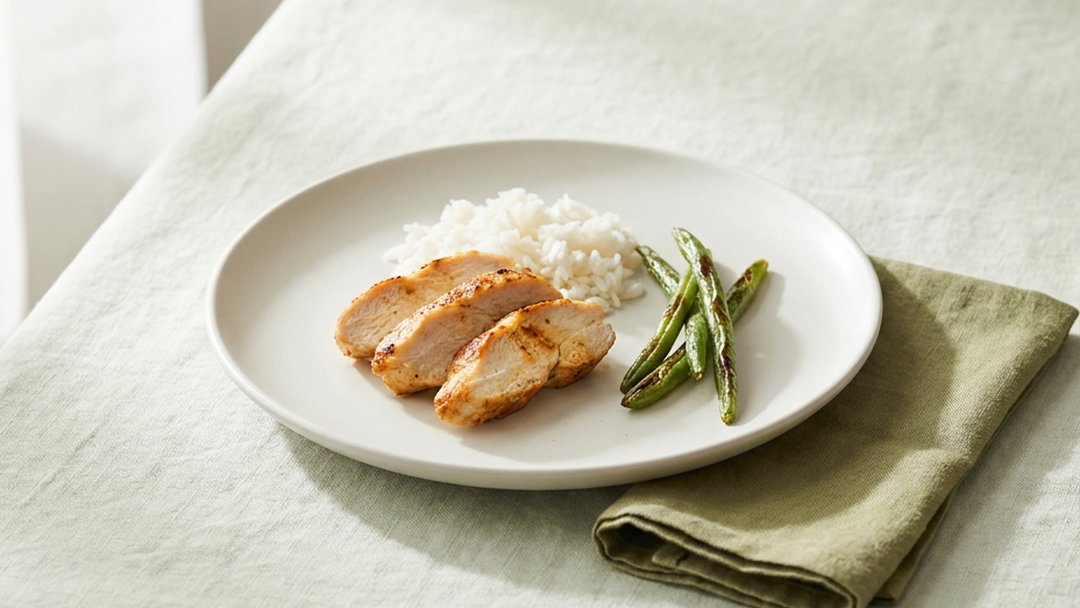
If you feel queasy on a GLP-1, you're far from alone. Nausea shows up in every one of these medicines' trials. The good news in the labels: it's most common while the dose is stepping up. Here's why it happens, what helps, and when it's a reason to call.
How common is nausea on a GLP-1?
| Medicine (dose) | Placebo | Medicine |
|---|---|---|
| Ozempic (0.5 mg, 1 mg) | 6.1% | 15.8%, 20.3% |
| Wegovy shot (2.4 mg) | 16% | 44% |
| Mounjaro (5, 10, 15 mg) | 4% | 12%, 15%, 18% |
| Zepbound (5, 10, 15 mg) | 8% | 25%, 29%, 28% |
Each label says rates from different trials can't be compared directly, because the trials were run in different people under different conditions. So compare each row with its own placebo, not with the other rows. Sources: Ozempic, Wegovy, Mounjaro and Zepbound labels, section 6.1.
Why do GLP-1s cause nausea?
The labels don't name one single cause, but they describe two things that are going on:
- A slower stomach. Food leaves the stomach through an opening called the pylorus (MedlinePlus). GLP-1 medicines delay gastric emptying (Ozempic label, section 5.10; Mounjaro label, section 5.9), so the stomach stays fuller for longer.
- Signals in the brain. The Wegovy label says the GLP-1 receptor is present in several brain areas involved in appetite regulation.
When is nausea most likely?
- During dose steps. The Ozempic label says most nausea, vomiting and diarrhea happened during dose escalation. The Mounjaro label says the same, and that they decreased over time.
- At the start, for tirzepatide's stomach effect. The Mounjaro label says the stomach delay is largest after the first dose and gets smaller over time.
- That's why doses start low. Ozempic starts at 0.25 mg for 4 weeks, and its label says the dose steps are meant to reduce the risk of stomach side effects. Mounjaro starts at 2.5 mg. Your prescriber sets the steps.
What helps with GLP-1 nausea?
MedlinePlus, from the National Library of Medicine, has general self-care advice for nausea and vomiting. It isn't written for GLP-1s specifically, but it's a solid place to start:
- Eat 6 to 8 small meals through the day instead of 3 big ones.
- Pick bland foods, like crackers, toast, rice, noodles, potatoes, and baked chicken or fish.
- Go easy on greasy, fried and very spicy foods, foods with strong smells, and caffeine, alcohol and fizzy drinks.
- Sip clear liquids through the day. MedlinePlus says cold water is best.
- Sit up after you eat, and sit quietly when you feel queasy. Moving around can make it worse.
- Get some fresh air if you can.
“Diarrhea, nausea, and vomiting may cause a loss of fluids (dehydration) which may cause kidney problems. It is important for you to drink fluids to help reduce your chance of dehydration.”
Can the dose schedule change if nausea is hard?
That's up to your prescriber, and it's worth telling them. The Wegovy label, for example, says that if someone doesn't tolerate a dose while it's stepping up, the prescriber can consider delaying the next step for 4 weeks. Don't skip, delay or change a dose on your own.
When is nausea a reason to call your doctor?
- Nausea, vomiting or diarrhea that doesn't go away. The Ozempic Medication Guide says to tell your healthcare provider right away, because losing fluids can lead to kidney problems.
- Severe pain in your stomach area that won't go away, with or without vomiting, which you may feel from your abdomen to your back. The Medication Guide says this can be a sign of pancreatitis: stop using the medicine and call your healthcare provider right away.
- Pain in your upper stomach, yellow skin or eyes, fever, or clay-colored stools. The Medication Guide lists these as possible gallbladder problems: tell your healthcare provider right away.
- General signs from MedlinePlus: you can't keep any food or liquid down, you vomit three or more times in a day, nausea lasts more than 48 hours, or you haven't urinated for 8 hours or more.
How Checkin helps with side effects
Checkin is a free AI companion for GLP-1s that you text. For this part of life on a GLP-1, it does three things:
- Text how you feel, any time
Plain answers from the FDA label, with a picture when it helps.
- It checks in two days after your shot
When many side effects show up, so you're not sorting it out alone.
- Warning signs get a straight answer
If something sounds serious, it tells you to call your doctor or 911 right away.