Can you eat candy on a GLP-1?
Yes. No food is off-limits on a GLP-1, and this isn't about which candy is “good” or “bad.” It's about comfort. GLP-1 medicines come with stomach side effects, and a few kinds of treats can make those louder. Knowing which ones helps you enjoy the night and feel fine the next day.
The most common side effects listed in the Medication Guides for Ozempic and Mounjaro are nausea, vomiting, diarrhea, stomach pain and constipation. Three things on a Halloween night can add to them: sugar alcohols, rich treats and big portions.
Why can sugar-free candy upset your stomach?
Many sugar-free candies are sweetened with sugar alcohols such as sorbitol and mannitol. Eaten in larger amounts, they can loosen stools. This is common enough that U.S. food rules require a warning on some foods:
- A food that could lead someone to eat 50 grams of sorbitol a day must carry the line “Excess consumption may have a laxative effect” (21 CFR 184.1835(e)).
- A food that could lead someone to eat 20 grams of mannitol a day must carry the same line (21 CFR 180.25(e)).
How to spot them: look on the ingredients list for words that end in “-itol”, like sorbitol and mannitol, and for that laxative line on the package.
Why does that matter more on a GLP-1?
Diarrhea is already a common side effect, so a treat that loosens stools stacks on top of it. In the labels' placebo-controlled trials:
| Placebo | Medicine | |
|---|---|---|
| Ozempic diarrhea (0.5 mg, 1 mg) | 1.9% | 8.5%, 8.8% |
| Mounjaro diarrhea (5, 10, 15 mg) | 9% | 12%, 13%, 17% |
Both labels say most nausea, vomiting and diarrhea happened while the dose was going up. So if you're in a dose-step week, that's when a pile of sugar-free candy is most likely to catch up with you. Losing fluids also matters:
“Diarrhea, nausea, and vomiting may cause a loss of fluids (dehydration) which may cause kidney problems. It is important for you to drink fluids to help reduce your chance of dehydration.”
Why can a big handful feel worse than a few pieces?
Food leaves your stomach through an opening into the small intestine called the pylorus (MedlinePlus). GLP-1 medicines slow how fast food goes through it. The Ozempic and Mounjaro labels both say the medicine delays gastric emptying. So a big handful of candy sits in your stomach longer than it used to.
A 2025 nutrition advisory for people on GLP-1s, from four nutrition and obesity medicine groups, says vomiting is more likely with large meals and suggests smaller, more frequent meals. Its list of eating habits that help even includes “Enjoy portion-controlled treats.”
What about rich, heavy treats?
The same advisory says avoiding large or high-fat meals can help with diarrhea, and that avoiding fatty foods in the first few days of treatment can ease nausea. Think rich chocolate bars, caramel, or a big slice of something creamy. You don't have to skip them. A smaller piece often sits better than a big one.
Small things that help on Halloween night
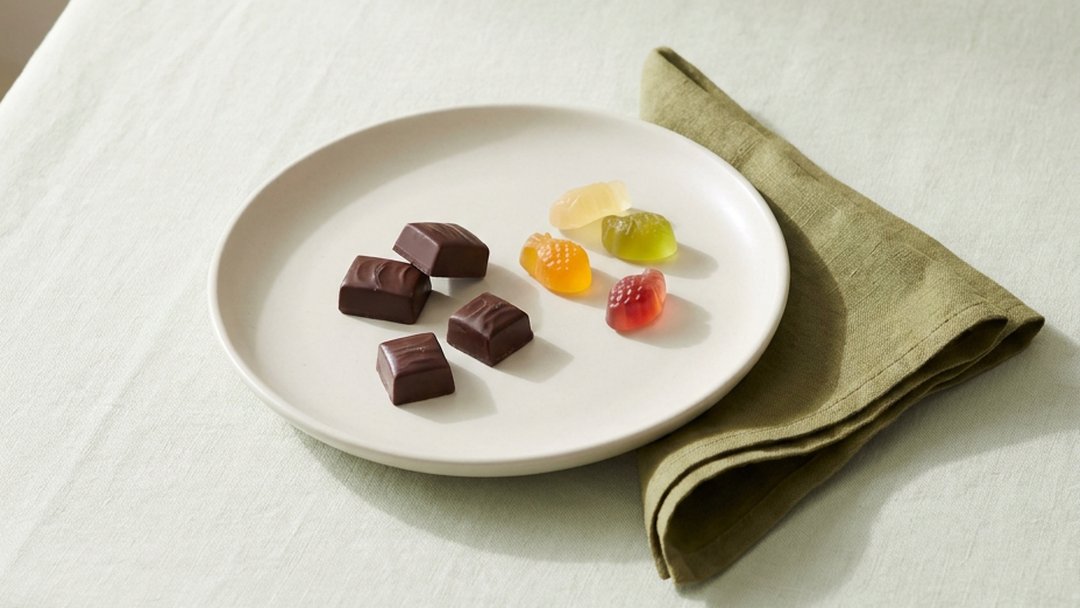
- Put a few pieces on a plate. Eat them, then wait a bit and see how your stomach feels before having more.
- Check sugar-free candy for “-itol” words if diarrhea has been bothering you.
- Sip water through the evening. The Medication Guide says drinking fluids helps lower the chance of dehydration.
- If you feel queasy, the advisory mentions ginger or peppermint tea, and MedlinePlus suggests sitting quietly and sipping clear liquids.
- Your shot schedule doesn't change for a holiday. Take it as prescribed. If you're unsure, ask your prescriber.
How Checkin helps with side effects
Checkin is a free AI companion for GLP-1s that you text. For this part of life on a GLP-1, it does three things:
- Text how you feel, any time
Plain answers from the FDA label, with a picture when it helps.
- It checks in two days after your shot
When many side effects show up, so you're not sorting it out alone.
- Warning signs get a straight answer
If something sounds serious, it tells you to call your doctor or 911 right away.