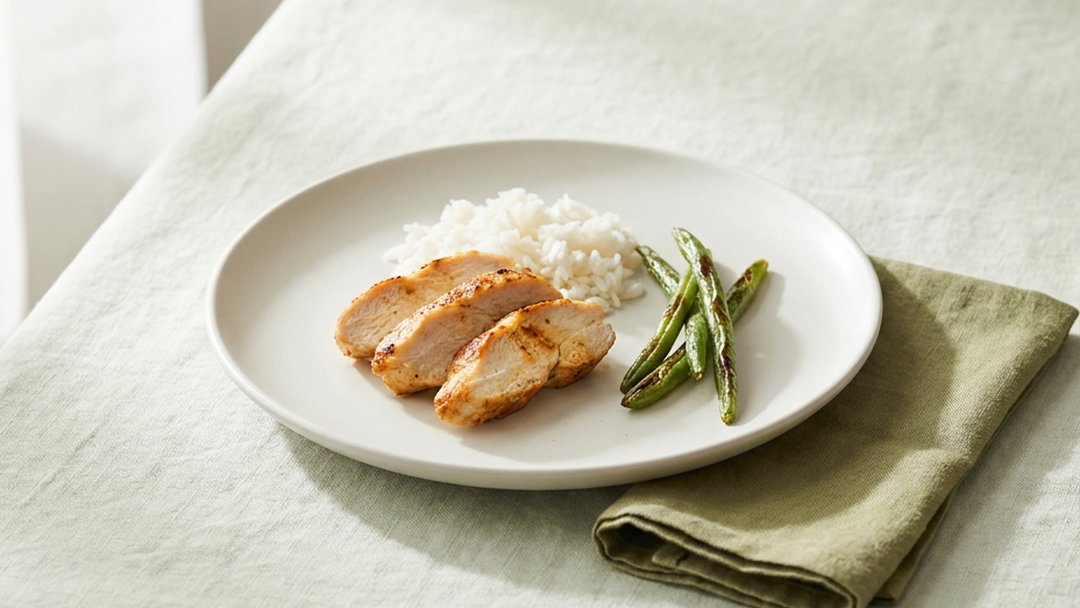
When you eat less, protein is easy to miss. It's also the nutrient your muscles are built from. Here's why people eat less on a GLP-1, what protein does, and easy ways to fit it into small meals.
Why do people eat less on a GLP-1?
- A slower stomach. The Wegovy label says it delays gastric emptying, so food leaves your stomach more slowly (Wegovy label, section 5).
- Less appetite. The Wegovy and Zepbound labels say these medicines decrease calorie intake, and that this is likely mediated by affecting appetite (section 12.2). GLP-1 receptors are found in brain areas that regulate appetite (section 12.1, Zepbound).
- Nausea and feeling bloated. The Wegovy Medication Guide lists nausea as a common side effect, and it can cut how much you want to eat.
Why does protein matter for muscle?
Protein is a chain of building blocks called amino acids, like beads on a string. Your body uses them to repair cells and make new ones (MedlinePlus). Muscle is one of the things it keeps repairing, every day.
A 2025 joint advisory from four nutrition and obesity groups (ACLM, ASN, OMA and TOS) lists protecting muscle and bone, with strength training and enough protein, as a priority during GLP-1 treatment.
How much protein do I need?
It depends on your body and your health. The advisory frames targets as something to set with a clinician or a dietitian, so we don't give a number here. If you have kidney disease or another condition that limits protein, ask before you change what you eat.
How can I fit protein into small meals?
- Eat the protein part of the plate first. If you fill up fast, it's the part you've already had.
- Pick protein-dense foods. Using USDA FoodData Central values: 1/2 cup of firm tofu is about 22 g, a 7 oz cup of plain low-fat Greek yogurt is about 20 g, and two large eggs are about 13 g.
- Go small and often. The advisory mentions small meals every few hours, with fluids if you feel queasy.
What about strength training?
The advisory pairs protein with resistance training. Ask your clinician what kind of activity is right for you.
Should I worry about drinking enough too?
Yes. Diarrhea, nausea and vomiting can cause dehydration, which may lead to kidney problems. The Wegovy and Zepbound Medication Guides say drinking fluids helps reduce the chance.
“Diarrhea, nausea, and vomiting may cause a loss of fluids (dehydration) which may cause kidney problems. It is important for you to drink fluids to help reduce your chance of dehydration.”
How Checkin helps with meals
Checkin is a free AI companion for GLP-1s that you text. For this part of life on a GLP-1, it does three things:
- Text a photo of your plate
It logs the meal with a protein estimate. A log is a sample of your day, not a full count.
- Ask for ideas
Text “easy high-protein lunch?” and get a plain answer, with a picture when it helps.
- It checks in two days after your shot
So you can say how your appetite and stomach are doing, and get ideas that fit.